The things I photograph most are sunset skies, trees, gardens and water. This may have a lot to do with the subject matter I have access to at the moment, but it is also because I enjoy and feel drawn to the interplay between light and natural objects.
There are a huge number of photographs and paintings of all of these on the internet. A quick image search brought up this range of trees and beaches.
Generic shots of trees and beach from Google search.
A tree is just a tree, what makes it interesting is an unusual shape, the way it is lit or what it frames – its position and role in the photograph. Photographers have used unusual angles such as looking up into the camera and foreshortening the view. Or they have heavily cropped the shot, for example just showing the trunks. Or they have used the trees as a frame, such as the avenue of trees that creates a tunnel, leading the eye to the end point.
With water, shutter speed has become more the more dominant way of adding interest to the shot; using slow speeds to create a milky atmospheric image. Light plays an important role in tree shots but it comes into is own with water shots both to catch highlights and movement and to take advantage of the often panaramic nature of seascapes. The sun often plays supporting actor to the seas lead and on occasions it takes centre stage.
My attempts at creativity
Using a potted Witch Hazel as my tree I took a number of shots to see how I could introduce an element of creativity into them.
Straight forward photograph of a potted Witch Hazel (witch hazel 1 plain small)
Images 3, 4 and 6 work best for me although none of them give a sense of scale or even perhaps acknowledge what the subject is.
This exercise was to explore controlled light as opposed to ambient light. I used a doubled-over white sheet to create a back drop and tried it two ways, ironed and wrapped. I did two set ups:
indoors making use of a flexible floor lamp which I could move around and a fixed overhead wall light.
in the conservatory which gave good around ambient light together with the flexible floor lamp.
Additionally, using lightweight materials, I tried changing the colour of the light. I didn’t nail the f stop/ISO all the time and as a result the subjects are sometimes a bit soft around the edges.
Eggsperiement 1
1st lighting set up.
This wasn’t a particularly successful set up as overall there was little light.
Left to right:
Side light, top light and back light.
Top light and backlight.
Top light with coloured fabric.
Eggsperiement 2
2nd lighting set up
1. Ambient light only
2. Ambient + cool side light strong
3. Ambient + warm side light strong
4. Ambient + warm side light
5 . Ambient + warm side light raised
6 . Ambient + warm side light strong raised
The stronger light was achieved by moving the side lamp closer (approx. 75 cm) to the egg. The stronger the light the more pronounced the shadow on the opposing side of the subject as do the shadows and lines on the background and the shadow cast by the subject is deeper as the strength of the light increases.. The colour cast of the light gives a different feel and affects both the subject and the background. I took this further by adding a strip of coloured material over the lamp and a coloured back light.
Shintaro chose to have his streets devoid of people (Buchanan, 2021) – this was not a choice for me when I went out. Covid-19 had made Rye, normally a bustling place in the post-Christmas period, an empty and silent post apocalyptic town.
‘In empty streets, the excessive colors and lights of neon signs seem deprived of their original purpose of attracting people’
Sato Shintaro – Landscape Stories, 2016/20.
The Christmas lights and warning lights seemed to have lost their purpose when there were no people around to see them and I couldn’t work out if it was defiance of the situation or apathy that led to them still being in place.
The streets photographed in the dark held a mystery that was missing from daylight photos. Artificial lights made interesting and unusual shapes; there were crisper shadows, colour casts and pools of light. The dark obscured objects, masking unsightly things only visible by day or creating secret pockets of gloom.
Red glow in Lion Street 2021
Who knew that scaffolding could look good? The artificial light here creates interesting patterns with the metal structure and a warm, fiery glow to the street. The lights are strong enough to allow us to see the street in detail.
I asked my long-suffering husband to be in shot and as a nod to the decisive moment and a touch of the Walker Evans , I got him to stand next to the ‘Caution – pedestrians in road’ sign. As luck would have it, the seemingly only other living person in the entire town shuffled past behind him.
Without any people around, it didn’t take me 30 minutes to take each shot like it did for Shintaro. The uninhabited photographs are very much about the ‘place’ rather than taking second stage to how they are used by us. It’s easier to imagine, despite the glare of modern light the, shop fronts and yellow lines, the people who would have trodden the cobbled streets to the church throughout Rye’s history.
This photograph has hints of Brassaï and Shintaro. The visible part of the street is suspended in the darkness. The pools of light just offer glimpses of what is there and highlights the textures of the walls. Because of the blankness of the dark the eye is drawn to the detail
Like the photograph above, the focus is on the light and the details it reveals. But if we look a little harder, just visible in the gloom is a figure.
Day Versus Night
Tumble weed High Street
Although this exercise was about observing different type of light, its impossible not to see the social implications of Covid-19 in these pictures. These were taken Saturday night and Sunday midday. The prominent Covid signs seem totally irrelevant in the empty streets. Rye is a tourist town. In a normal year these pavements would be thick with people trying to avoid cars as they step into the road to get round each other. The silence was what struck me most.
Its not about which photograph is better; day or night. Each one conveys a different message. In the daylight photograph the light is soft. There are no shadows and fewer sharp edges. Reflections in the windows are clearer and bright spots of colour stand out more. As with the night time shot, the lack of detail in the sky means your eye is drawn to the street. In the daytime it is the red of the sign that is the focus whereas in the night it is the glow of the lights.
Department of Photographs. “Walker Evans (1903–1975).” In Heilbrunn Timeline of Art History. New York: The Metropolitan Museum of Art, 2000–. http://www.metmuseum.org/toah/hd/evan/hd_evan.htm (October 2004)
Not so much a photographic exercise but more a post-production one. While looking at the black-and-white images of Atget, Mann and Schmidt in Daylight 1, I came across Olafur Eliasson. His art is wide ranging; film and photography, sculpture and installation art. On his website I discovered one of his books – a cookery book. This contains beautiful (ok, I know that’s subjective) photographs in black and white but with a twist.
Olafur Eliasson – TYT (Take your time) vol. 5: The Kitchen,2013
I really enjoyed the effect of the flashes of colour and how they created emphasis. I took two of my own photographs and created a similar effect in Photoshop.
Katie Buchanan – Flashes of colour 2021
The eye is drawn first to the flashes of colour. This means I can direct my viewers gaze and also dictate the meaning of my photographs.
After doing a spot of research into the black-and-white photography of Eugène Atget, Michael Schmidt and Sally Mann, I decided to explore the use of the flat daylight preferred by Atget and Schmidt and look at how changing the photographs from colour to monochrome affected them.
The photographs were taken around midday when there would naturally be fewer shadows, but the sky was very overcast anyway. The light was what I would describe as ‘soft’. The lack of shadows does as Schmidt said allow the real shapes of things to be seen. It was interesting to see how converting the photographs to black and white made some of them more interesting and I could understand why Schmidt felt that colour could be intrusive, bringing its own interpretation on a scene.
Lion Street – Colour vs black and white
The image above works equally well for me in colour or black and white. I think this is because there is a wide range of colours; the yellow lines, the red lights, the blue tarpaulin, orange lichen and the green door.
The Churchyard – Colour vs black and white
The churchyard becomes more atmospheric in black and white. The shapes of the graves and the twists in the tree trunk become the focal point rather than the green of the grass. The same is true of the photograph below, the black and white creates a less cluttered image and the focus is on the person, my long-suffering husband, rather than the bright balls in the window.
Festive window display – Colour vs black and white
To me, photography is the simultaneous recognition, in a fraction of a second, of the significance of an event as well as of a precise organization of forms which give that event its proper expression.
Henri Cartier-Bresson (Fotoroom, 2020)
Just like Cartier-Bresson’s photograph Behind the Gare Saint-Lazare, this photograph was taken more by luck than planning. My intention was to capture my husband as his attention was caught by a group of people in Brede Woods; what I hadn’t noticed until I looked back at the image, was the figure in black walking behind him. This furtive looking character combined with the disconcerted look on my husband’s face creates an interesting narrative. This was a decisive moment – a tad later and my husband had moved. The photograph is an unintentional homage to the figures or shadows of figures, caught by Cartier-Bresson.
The Decisive moment – coined by Cartier-Bresson; what is it exactly?
The three examples from the OCA course have a variety of takes on it.
I think I agree with Henri Cartier-Bresson that photographs are a matter of chance. You can prepare yourself to a certain extent to take a photograph; you can go to a specific place at a specific time but unless you can choreograph everything than you cannot guarantee getting that special shot.
It’s down to the individual taking the photograph what it is they want to capture, if the shot you want contains a person or persons then do you want to capture something of their true essence or just their reaction to a situation?
And then when it comes to a situation are you going with the intention or recording a specific thing or action or are you intending to record what actually does happen without knowing what that will be?
For example, in sport, you are expecting to get shots of the winners, losers, spectators, missed goals, spectacular shots etc you may get some unexpected happenings such as a streaker on the pitch but with the former, you have prepared yourself and your camera and you are waiting for that decisive moment when the ball leaves the foot, hand or bat. With the streaker you need to react instinctively, it’s more of an indecisive moment in that it is intentional, but it can’t be planned. And then there are those moments that cannot be planned for but still fits the brief of a decisive moment. One of the most evocative photographs for me is one taken by a friend of my daughters. At first glance it seems ordinary; the last moments of a warm spring evening, a young man with his back to the camera, his demeanour relaxed and content. But this photograph captures a unique and unrepeatable moment. This was to be the last photograph of him. Cartier Bresson also remarks on the prophetic nature of photography in L’amour de court’ when he retells his encounter with Ghandi, meeting and photographing him moments before he was assassinated. These are the anecdotal images that Zouhair Ghazzal (2004) refers to on his website.
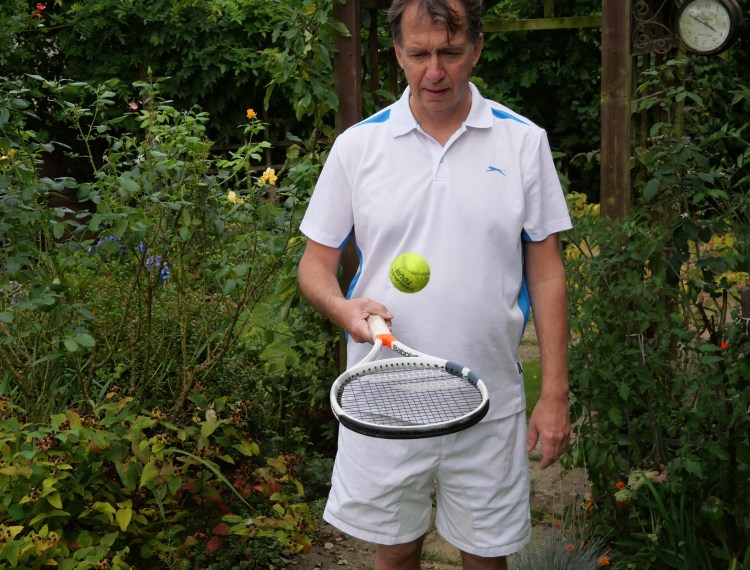
This is a serendipitous shot. Just at the right moment a butterfly flies into shot and lines up perfectly with the ball and racket. I was using a short shutter speed at the time to freeze the movement of the ball and was lucky enough to also capture the butterfly suspended in mid-air.
In Ghazzal’s view ‘The decisive moment is, therefore, that infinitely small and unique moment in time which cannot be repeated, and that only the photographic lens can capture’ (Ghazzal, 2004). This assertion that it can only be captured by the photographic lens is not borne out by opinion of others from L’amour de court. Cellist, Paolo Beschi experiences that moment in music, ‘After all the preparation you get ready to play and then as you start something is released like a camera shutter’ (O’Bryne, 2014)
Contrary to Paul Graham who tends towards diptychs or triptychs to show the before and after of that moment, Zouhair feels that a single frame can encompass all of that. For Graham, there is no single moment more, as it is put in the publisher’s description of his book The Present ‘a world of shifting awareness and alternate realities, where life twists and spirals in a fraction of a second to another moment, another world, another consciousness.’
Whichever moment is chosen by the photographer is the decisive moment, whether the image has any merit is largely down to chance.
I continued to experiment with long shutter speeds. Looking for inspiration I decided to see what I might capture in the night sky (quick note here that I still can’t work out how to do an exposure of longer than 1 minute on my Lumix, although I think I should be able to). The moon was big and bright, and some stars were also out. The camera was set to shutter priority, so the camera chose the f stop and to keep it steady I used a tripod.
I had no preconceived ideas about what I wanted to achieve. The first couple of shots were very uninteresting but then – serendipity! A neighbour decided to let off some fireworks and I re-positioned to get them in shot. It was frustrating that I had to wait for 12” before being able to take another shot. The camera adjusted itself with the focal length, letting less light in. But in the end – voila! In both the 3rd and 4th pictures you can clearly see the light trails.
Details clockwise from top left:
f/14.0
shutter speed 60.0
ISO 200
f/5.6
shutter speed 6.0
ISO 200
f/5.6
shutter speed 6.0
ISO 200
f/9
shutter speed 6.0
ISO 200
1.not a clear image, f/14.0 probably didn’t let enough light in. The combination of f stop, shutter speed and ISO didn’t work and made the image blurry, or it could have been I needed a different lens.
2 & 3. f/5.6 – this allowed more light in and worked better with an increased shutter speed.
4. f/9 adjustment made by camera to compensate for brightness of fireworks.
I had found that long shutter speeds I was having difficulty not overexposing so my next attempts were made using a variable ND filter to capture a moody morning.
f/22.0
Shutter speed 15.0
ISO 200
f/22.0
Shutter speed 6.0
ISO 200
f/22.0
Shutter speed 15.0
ISO 200
f/22.0
Shutter speed 6.0
ISO 200
Although the mist had started to disappear by the fourth shot, the change in light makes this my preferred image.
And finally I went to the seaside and caught some waves
f/22.0
Shutter speed 1/8
ISO 200
f/22.0
Shutter 0.5
ISO 200
f/22.0
Shutter speed 0.5
ISO 200
f/ 22.0
Shutter speed 1/8
ISO 200
f/ 22.0
Shutter speed 1/8
ISO 200
f/ 10.00
shutter speed 1
ISO 200
f/22.0
Shutter speed 1
ISO 200
f/22.0
Shutter speed 4
ISO 200
As the shutter speed decreases the images where there is movement, become milkier and form a stark contrast with the pebbles in front which are static. In faster, but still slow shutter speeds, the streaks of light become more obvious too.
I shot this in low light to create a dream-like atmosphere and used ISO 400 and a long shutter speed to prevent it being too dark. I got the misty quality I was looking for but the image was greatly enhanced by my subject unexpectedly exiting stage right.
At the other extreme the following picture is way overexposed, but in its own way creates an interesting image. Moving my camera upwards whilst taking the shot made the image more abstract and rather painterly.
Purple Flames
f/22.0
Shutter speed 1/6
ISO 800
By adjusting the exposure in camera raw – reducing by 1.05 – the image is improved.
Dark Purple Flames
With the next image, I used a slow shutter speed and zoomed-in whilst I was taking the picture which gave an interesting central burst effect. I think this idea might work but the idea would need to be refined.
I was quite happy with the shutter speed experiments I had done but I still really, really wanted to try and nail raindrops and when we got another terrific downpour I tried again; this time with more success.
I did further research (Milk and other liquids) into two more photographers recommended in the OCA course book, Jeff Wall and the pioneering Harold Edgerton, I also found another high-speed photographer Markus Reugel, who’s colourful shapes created by fluids was quite inspiring (Buchanan, 2020). This research also showed me one of the reasons I was having quite such a hard time photographing rain – it’s not quite thick enough. I don’t have a fast flash but I had read online about the ISO-Shutter speed-Aperture triangle (Hall, 2019) and took this into account for this shoot which did make a difference to my images. Learning from the previous attempts, I set my focus on the point at which I thought I was going to get the best drips. I wanted the background to be blurry so that the eye was drawn to the raindrops. I started taking photographs at various fast shutter speeds upping the ISO until I froze the rain.
Photographic details clockwise from top left
f/5.6
Shutter speed 1/600
ISO 1600
f/5.6
Shutter speed 1/1600
ISO 8000
f/5.6
Shutter speed 1/1600
ISO 6400
f/5.6
Shutter speed 1/1600
ISO 8000
In the end, my preferred photograph is the one used as the featured photograph at the head of this blog. This was cropped and I added a black and white filter.
My technical skills let me down a bit but I’m learning. Looking on line I think I’ve got a good idea about what has been going wrong with my photographs even if the pictures I take are only improving slowly.
Choosing a subject.
Rain drops
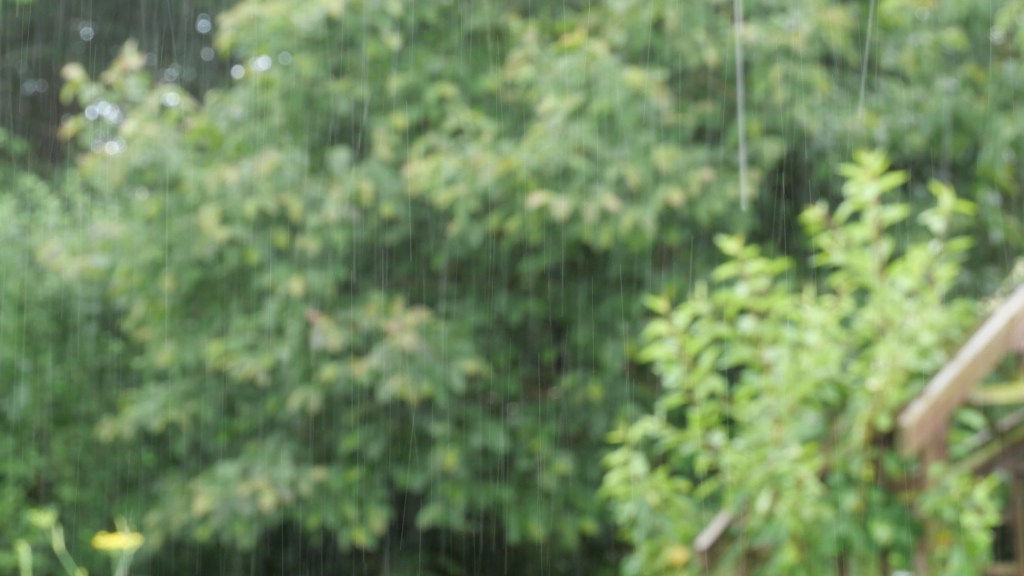
During a very heavy downpour a month back I tried to capture the rain. This wasn’t very successful, but I wasn’t sure why. I had hoped that I would get clear, individual drops but the best that I got was a streaky blur.
Raindrops 1_1
f/100
Shutter speed 1/50
ISO 1600
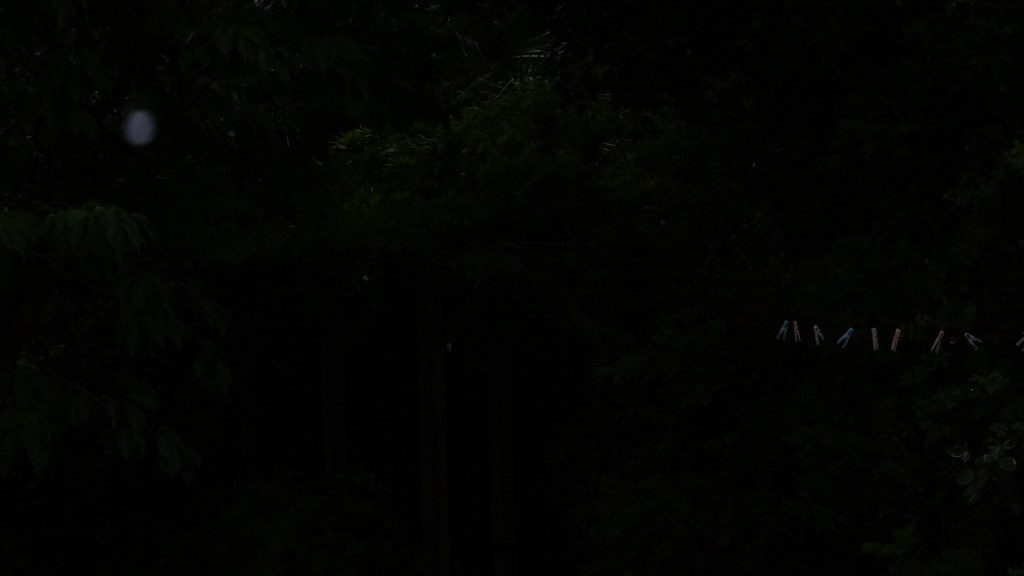
I also found that I was having trouble with exposure, with only the clothes pegs barely visible in the image below.
Raindrops 1_2
f/5.6
Shutter speed 1/4000
ISO 1600
Looking back on it now I can see that the shutter speed was too slow to capture the individual drops in 1_1 and the ISO and shutter speed incompatible in 1_2.
Bee
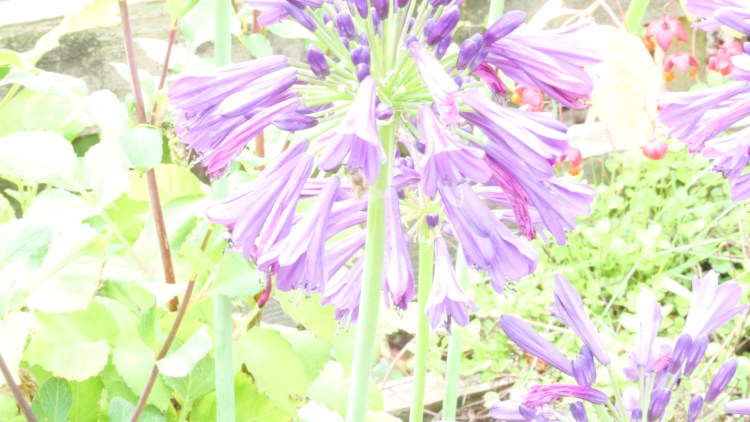
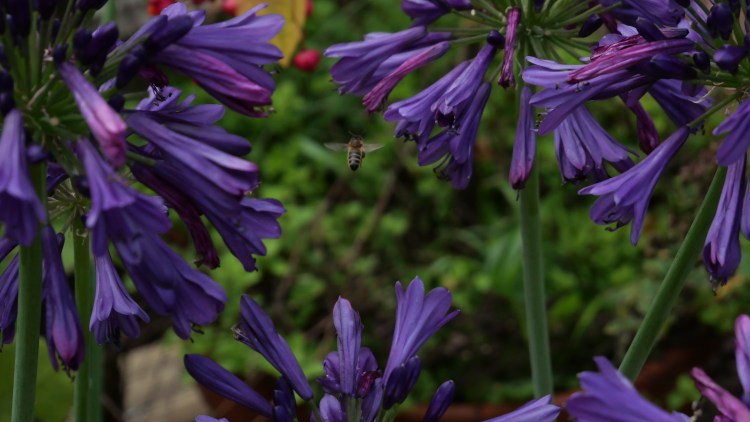
On my second attempt at mastering shutter speed I tried to capture a bee in mid-flight. Getting the ISO and shutter speed right so that visible blur was avoided proved tricky.
The photos were either very over or under exposed. The photograph on the right was nearer the mark with a faster shutter speed and thus a clearer image of the bee. If the ISO had been higher then the exposure would have been better.
f/22.00
Shutter speed 1/6
ISO 800
f/ 5.6
Shutter speed 1/2500
ISO 1250
Bee 1
f/ 5.5
Shutter speed 1/320
ISO 400
This photograph was more successful in as much as the exposure was correct and it was in focus. The bee as the subject of the photo is too small and the shutter speed not fast enough to properly capture the beating wings. I realised from doing this that it is really hard to get a good photograph when you have no control whatsoever over your subject.
Tomato drop
I then though of capturing the moment that a tomato fell from its bush. As I didn’t have time to wait until one dropped naturally, I had to enlist the help of my partner to drop one into shot. As with all the previous attempts I set my camera to record bursts of images. I got my trusty helper to hold the tomato in what I hoped would be the right position and using a tripod to keep the camera steady, I set the focus for this point.
f/ 6.3
Shutter speed 1/320
ISO 400
f/3.8
Shutter speed 1/1000
ISO 400
The shutter speed was too slow in the first photograph and the tomato was blurred. In the second photograph the faster shutter speed created a better image. With the ISO the same the increased shutter speed could have made the image too dark but the change in f stop helped to keep the exposure to acceptable levels.
My favourite tomato shot is the one below.
f/5.3
Shutter speed 1/1000
ISO 400
I like this one as the position of the tomato shows that it is falling rather than still attached to the bush.
Trying to bet more control over my subject I again got my long-suffering husband to help. He’s a big tennis fan, both watching and playing, so it was natural for him to pick up a bat and ball. He was really not keen on the first attempt with the orange foam ball as he hadn’t ‘prepared’ himself but from my point of view these shots worked. The background could have been a bit brighter, but on the whole the shutter speed adequately ‘froze’ the moment.
Once in his ‘proper’ gear I took more photographs and it showed a moment of serendipity. After having tried and failed to capture an insect in flight, a cabbage white obligingly flew into shot. The shots could have been a bit brighter and also the shutter speed a tad faster to obtain really sharp images.
In-line butterfly
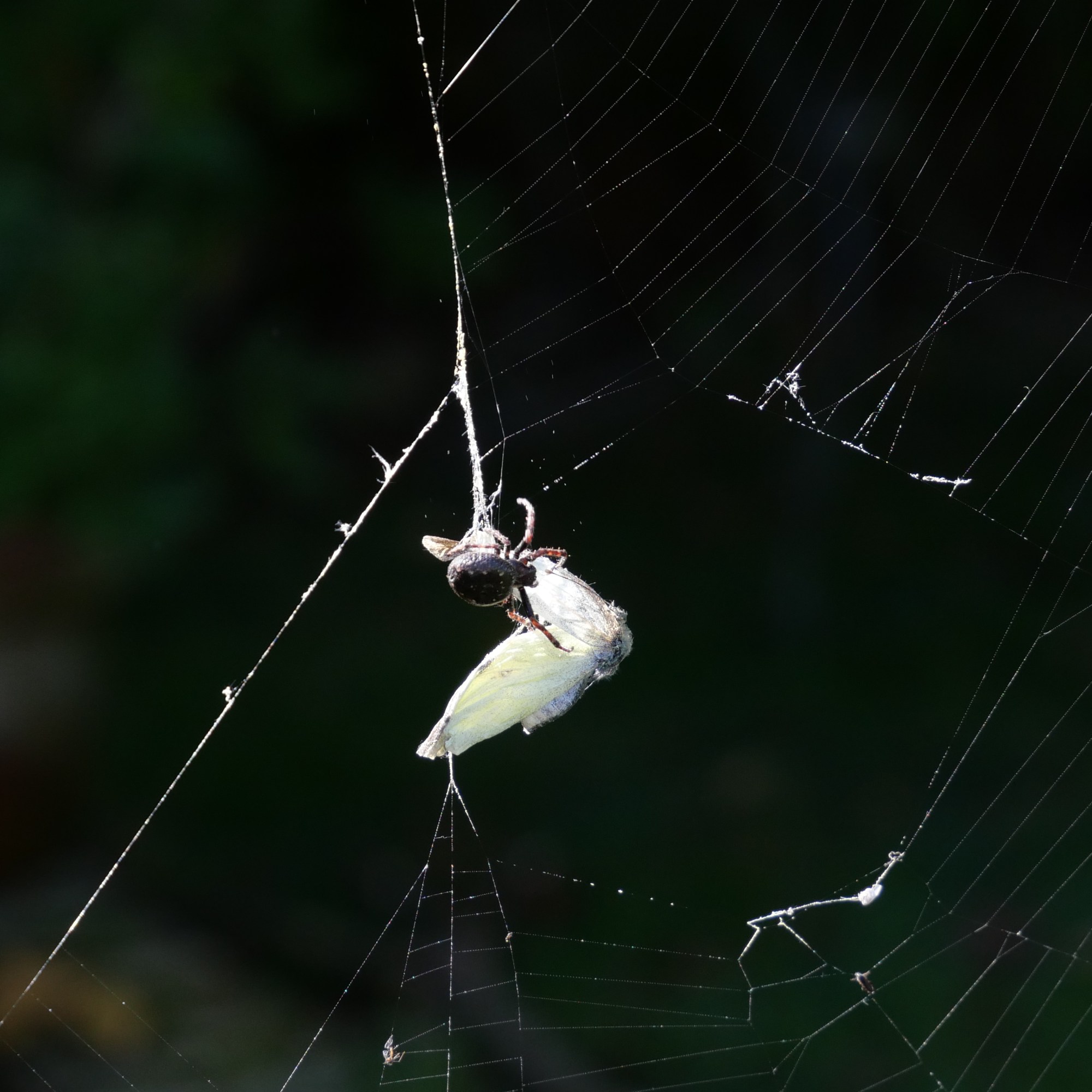
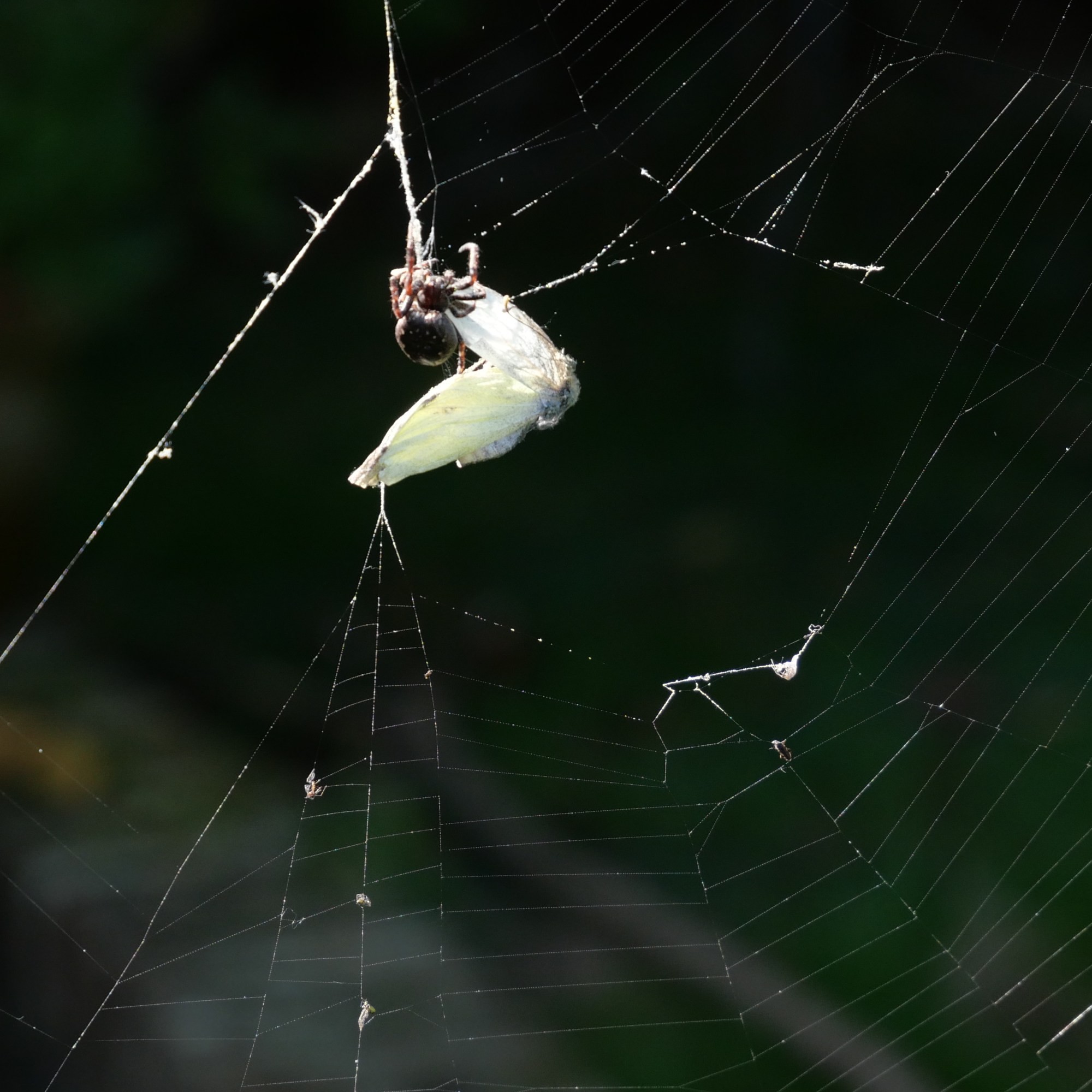
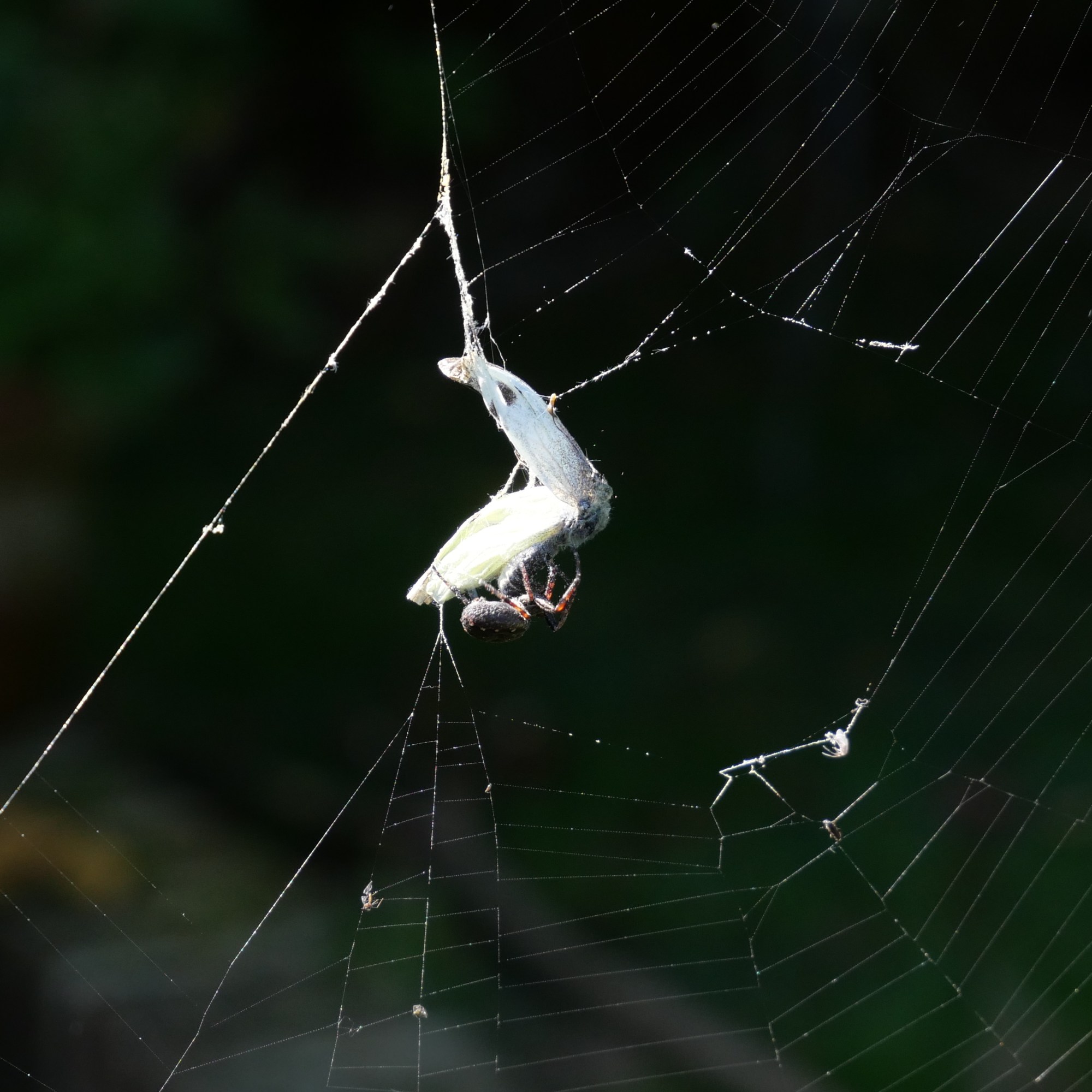
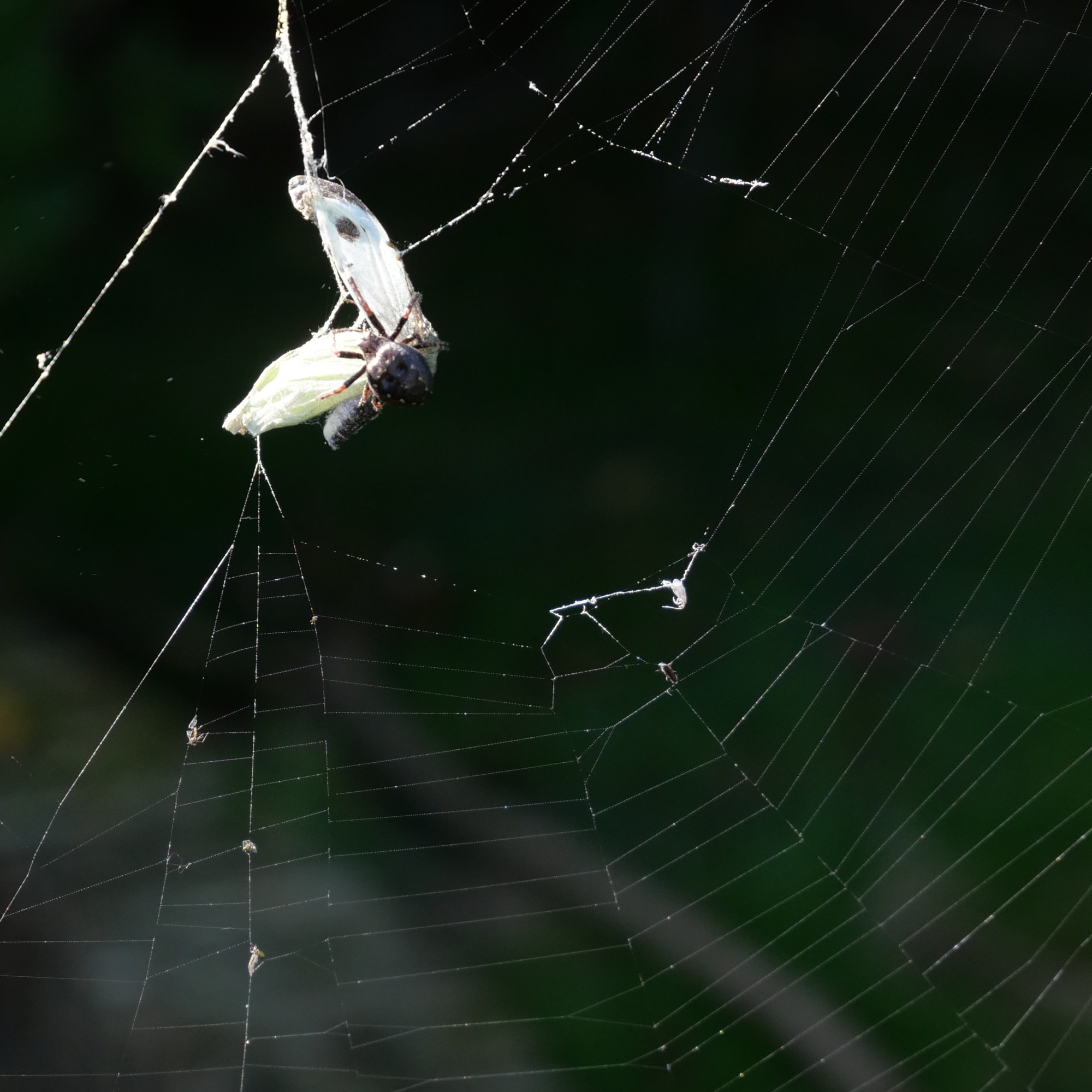
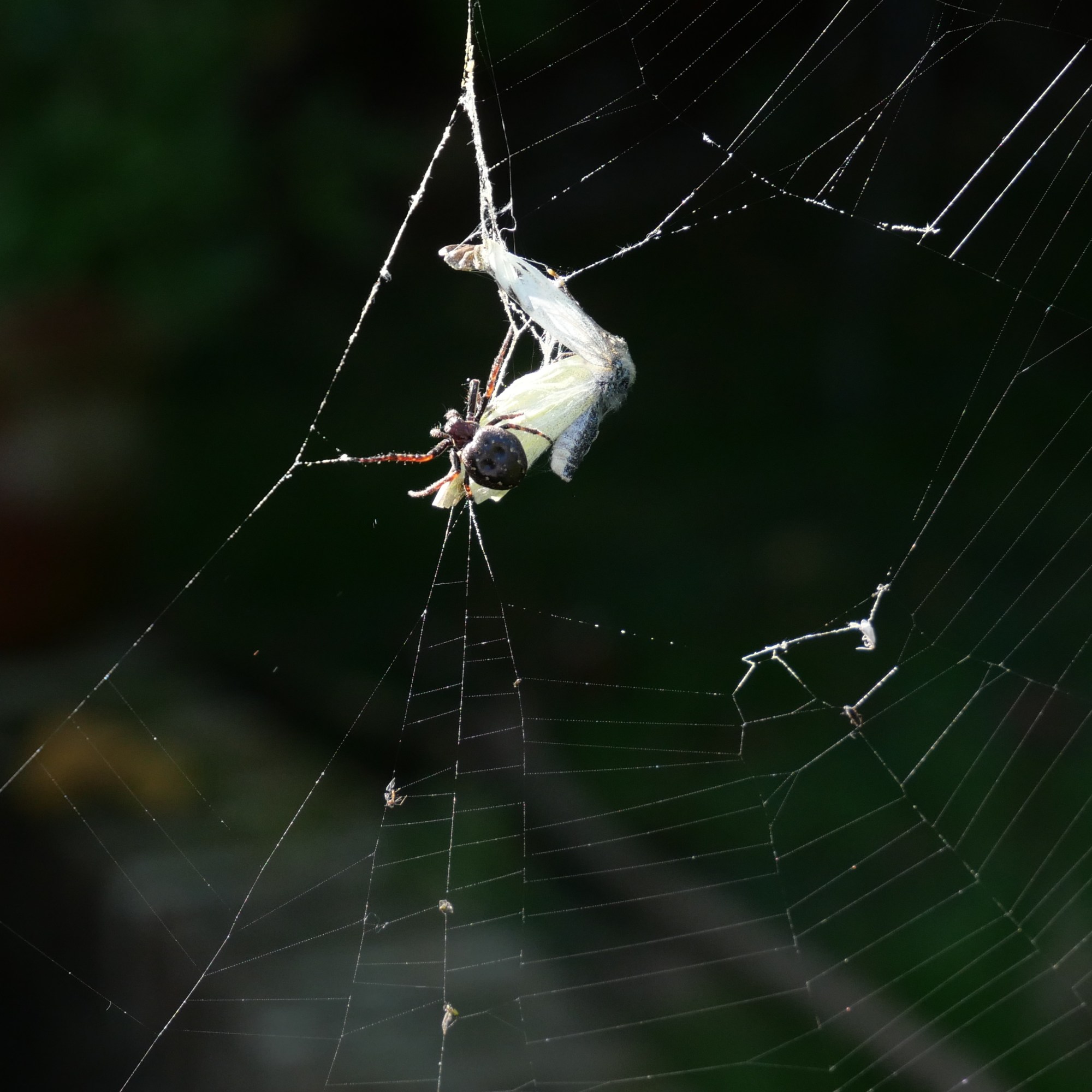
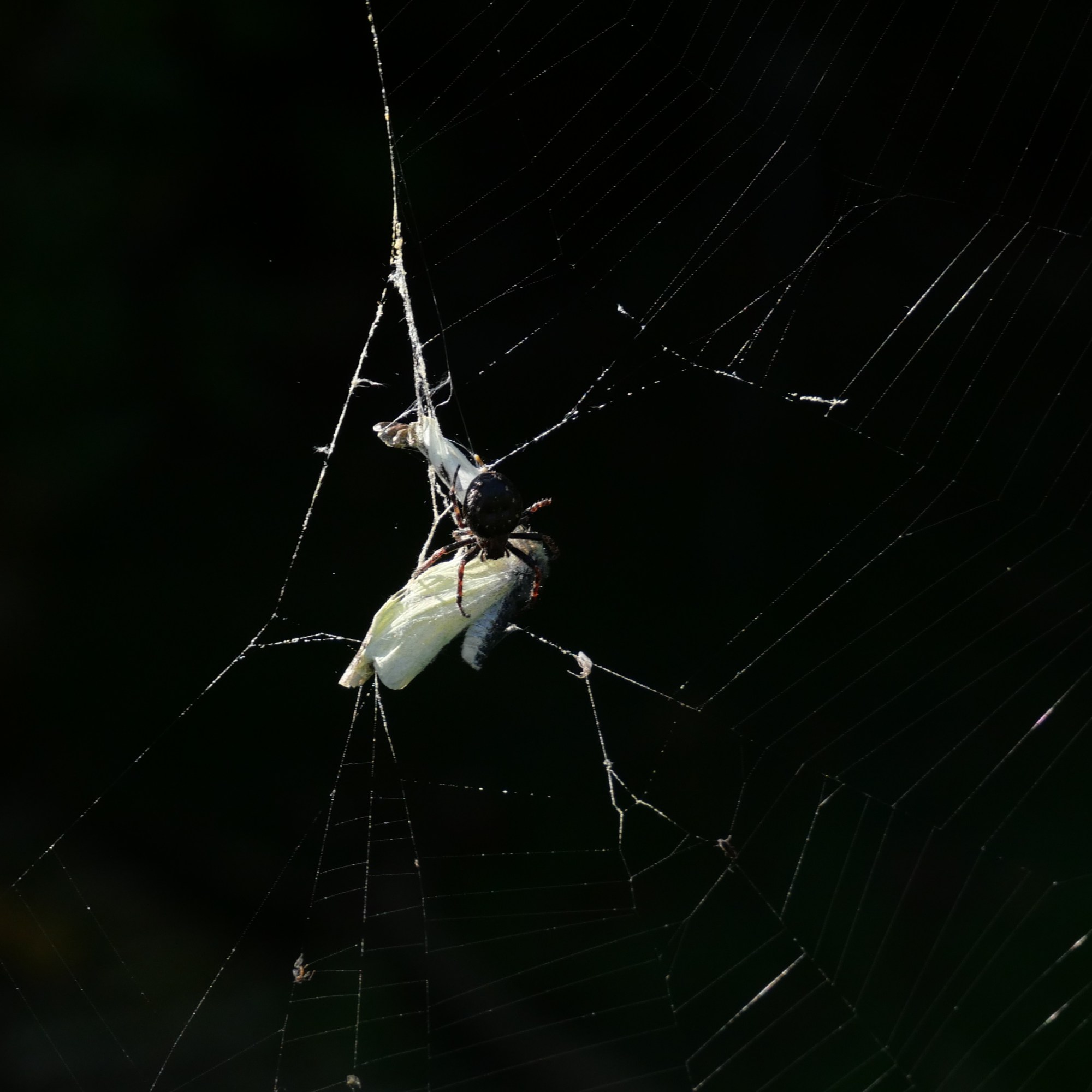
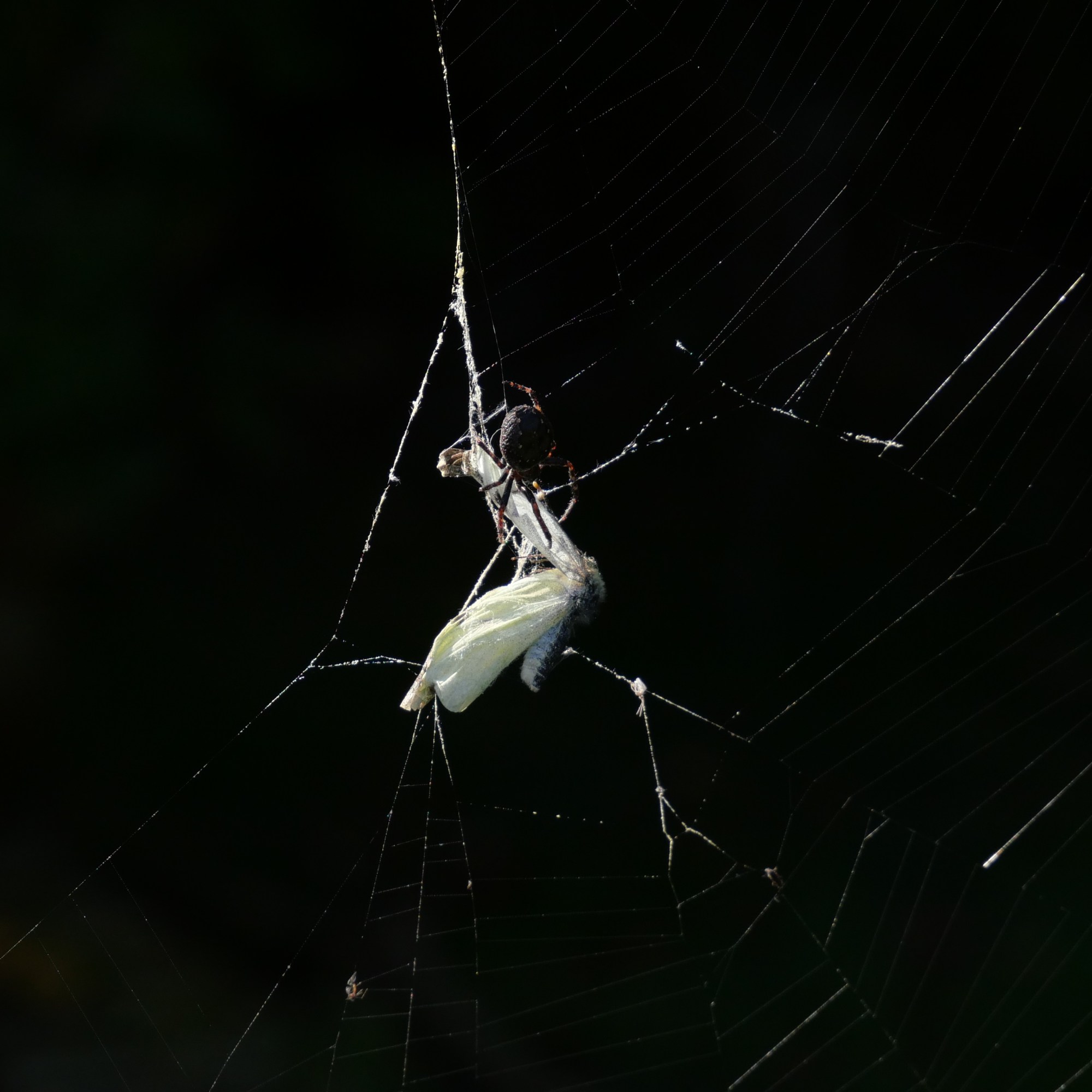
The next try wasn’t planned at all. Out in my garden I noticed a butterfly which had just got caught in a spider’s web. Rather macabrely, I set up my camera to take photos of it. As I deliberated on whether or not I should try and free it from its prison, a large spider shot down from its hidey-hole in the clock and sealed its fate. I used a fast shutter speed to capture its final moments. The background in particular looked very dark at times due to the chosen ISO and although this meant it probably wasn’t a correct exposure, I did like the effect that it produced.








 Katies Photographic Journey